The Second Customer
AI agents now browse, compare, and buy on behalf of real customers. They don’t watch your product video or respond to your brand design. They read your data and decide whether a human ever reaches you at all.
 Nadim A. Massih4 June 2026 · 12 min read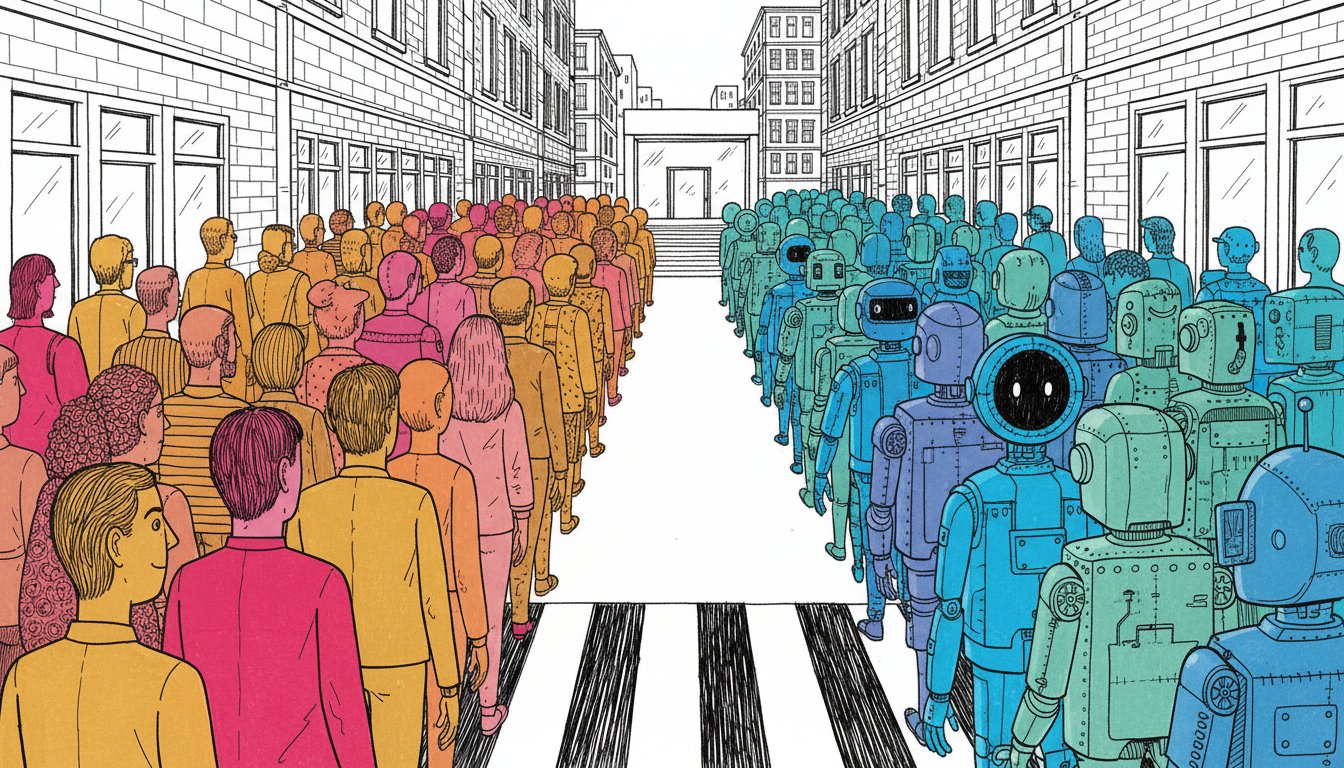
On 31 October 2025, Amazon sent a cease-and-desist letter to Perplexity AI.
The accusation was not that Perplexity had built a competing product. It was that Perplexity’s Comet browser was helping people use Amazon’s own product, in a way Amazon had not designed for and had not authorised.
Comet is a shopping agent. You tell it what you want. It navigates the web, finds the product, and completes the purchase on your behalf. The person using Comet gave it explicit permission to act for them. Amazon, the platform Comet visited, had not agreed to that arrangement.
On 9 March 2026, a federal judge in California granted Amazon a preliminary injunction. US District Judge Maxine Chesney wrote that Amazon had provided strong evidence that Comet had accessed its website “at the user’s direction, but without authorisation” from the platform itself.
The legal proceedings may run for years. The distinction Judge Chesney drew is not a legal technicality. It is the structural problem every product now faces, whether they have been to court about it or not.
The user said: go to that product on my behalf. The platform said: I never agreed to that.
That gap, between what the user authorised and what the platform was built for, is the interface problem of 2026.
The scale of that problem became visible in Q1 2026, when the traffic data arrived.
The Traffic You Did Not Send For
Adobe Analytics measured AI-sourced traffic across more than one trillion US retail visits in Q1 2026.
It grew 393% year over year. During the 2025 holiday season, the growth had been 693%. The rate is not levelling off (Adobe Analytics, 2026).
Salesforce’s analysis of the same period found that AI and agents drove 20% of all retail sales and influenced $262B of global online spend over November and December 2025. Autonomous agent actions increased by 142% over the same window (Salesforce, 2025).
The most striking figure is the conversion reversal. In March 2025, AI-sourced traffic converted 38% worse than human traffic. In March 2026, it converted 42% better. Revenue per visit was 37% higher. Time on site was 48% longer (Adobe Analytics, 2026).
The product did not change. Most likely, the agent had learned to identify what the human actually wanted, and was filtering to the sessions most likely to convert.
Two Users, One Interface
The human and the agent want the same outcome: the right thing, at the right price, quickly.
The paths they take are entirely different.
The human navigates. They land on the homepage, scan the headline, watch the video, read the pricing comparison, hesitate, close the tab, come back. The interface earns their trust across several visits. The copy matters. The personality matters. The design matters.
The agent parses. It arrives at a URL and extracts: price, specifications, availability, a countable proof signal (a specific, verifiable number: review count, star rating, units sold). It compares across three competitors in the time the human was reading the first paragraph. It executes when the criteria match.
The agent does not watch the video. It does not respond to brand warmth. It does not care about the scroll animation. What it needs is information that is structured and labelled (organised so software can find and extract specific values), and readable by a machine.
The agent does not watch the video. It does not respond to brand warmth. It does not care about the scroll animation.
What the Machine Cannot Read
Adobe’s April 2026 analysis of more than one trillion US retail visits measured what agents can and cannot see.
The average homepage is 75% machine-readable (structured so software can understand and extract it). The average product page: 66% (Adobe Analytics, 2026).
The 25 to 34% that is invisible to an agent is, in most cases, the differentiating content: the main promotional video at the top of the page, JavaScript-rendered pricing comparisons (content that only appears after the page loads fully in a browser, invisible to anything reading the underlying document), CSS star ratings (visual stars rendered by browser code, invisible to anything reading the raw page), interactive demos, scroll-triggered copy. Every design pattern that builds trust with a human reader is, to an agent, a void (Adobe Analytics, 2026).
The 34% invisible on a product page frequently contains the specific differentiators that separate the product from its competitors: the copy written to justify the price, the proof that addresses the main objection, the specification that wins the decision. An agent that cannot read those sections defaults to price alone (Adobe Analytics, 2026).
Early analysis of Shopify merchant data by Presta (a commerce analytics platform) in 2026 found that stores optimised for agentic discovery saw 28% higher conversion from AI-driven traffic compared to stores that had not made those changes (Presta, 2026). These results come from a single study; real-world variation by category is expected. But the direction is consistent with Adobe’s broader data: the structured surface converts better for agents and, in most cases, better for humans too.
The product that loses the agent comparison on price loses the sale before the human ever sees the page.
Understanding how that comparison happens requires understanding how agents connect to products in the first place.
What the Protocols Require
MCP: The Interaction Layer
Two protocols now govern how agents interact with and complete purchases in digital products.
The Model Context Protocol (MCP) is the agreed standard for AI agents to interact with products without scraping webpages. Anthropic published it in November 2024. In plain terms: rather than guessing what the price is from the HTML, the agent has a direct, structured conversation with the product itself.
Within ten months, OpenAI, Google, and Microsoft had adopted it. By March 2026, over 10,000 active MCP servers were running in production, with 97 million monthly downloads of the SDK (Anthropic/MCP Registry, 2026). MCP is infrastructure, not experiment.
ACP: The Transactional Layer
The Agentic Commerce Protocol (ACP), co-developed by OpenAI and Stripe, published as an open standard in September 2025, is the checkout flow for agents. If MCP is the door, ACP is the checkout. It handles how an agent identifies itself to a merchant, how payment credentials are handled securely, and how a purchase completes without a human clicking through a single screen. Salesforce, Etsy, and major Shopify merchants have adopted it. US ChatGPT users can already complete purchases from Etsy sellers inside the chat interface, without visiting Etsy’s website. The specification is open-sourced on GitHub.
The Amazon case turns on the Computer Fraud and Abuse Act (the US federal law making it illegal to access a computer system without the owner’s permission). The distinction: the user’s authorisation versus the platform’s authorisation. The Agentic Commerce Protocol is precisely what is designed to resolve that gap before it reaches a court.
The legal picture is still settling. The commercial case for acting now is not.
One Fix, Two Better Users
The changes that make a product agent-readable also make it a better human product.
Optimising for agents is not a concession to a secondary user at the expense of the primary one. The improvements compound.
Clear information hierarchy (price stated plainly, specifications structured, social proof as text with a countable number, a single unambiguous action) is what an agent needs to parse and act. It is also precisely what reduces friction for the human buyer. The page that gets out of the way of the decision converts better for both.
The agent’s requirements push product teams to make the human-readable improvements that most should have made already. The plays that follow serve both users.
Three Plays
The Surface Audit
Disable JavaScript in your browser and reload your primary product page. Try to extract four things from what remains: the current price, three key differentiators, one countable piece of social proof, and a clear primary action. If any are missing, your agent surface has gaps. This audit takes thirty minutes, requires no developer, and no specialist tools. The missing items are your work.
Founder-executable · 30 minutes · No tools requiredSchema Markup
Schema markup is a set of small code blocks that describe your page content to machines in a standardised format: product name, price, availability, review rating; FAQ question-answer pairs; navigation breadcrumbs. These are already required for Google AI Overviews and are the first structured layer an agent reads. For most products, product schema and FAQ schema can be added through a plugin (Yoast SEO or Rank Math on WordPress). Custom builds need an engineer. One implementation, two audiences. Gartner projects 40% of enterprise applications will include task-specific AI agents by end 2026 (Gartner, 2026).
Plugin on standard platforms · Engineer on custom builds · Serves AI Overviews tooAgent Endpoint
Read the Agentic Commerce Protocol specification (open-sourced at github.com/agentic-commerce-protocol). Identify which of your existing checkout steps it maps to. Adopting ACP does not require rebuilding your checkout: it requires exposing a structured, callable surface over what you already have. For most products, this is a 2 to 4 week engineering project. Your product becomes accessible to every AI assistant that has adopted the standard, across every platform, without building separate integrations for each.
2 to 4 weeks engineering · Open standard, free to adopt · Resolves the authorisation gapServe the Second User on Your Terms
The serving problem is solvable in a quarter. The second customer is already at the window.
The Amazon case will not resolve cleanly. The Ninth Circuit will draw a line between user authorisation and platform authorisation, and wherever it lands, new questions will open. The legal argument will continue for years. The commercial pressure will not pause for it.
AI-sourced traffic grew 393% in the first quarter of 2026 (Adobe Analytics, 2026). It converts 42% better than human traffic. Agents influenced a quarter of a trillion dollars in holiday spend (Salesforce, 2025). These are not projections. They are what already happened, measured across more than one trillion retail visits.
Your product is serving a second customer whether you designed for it or not. Build the door. They are already at the window.
- Run the no-JavaScript audit on your primary product page. Write down what disappears. Identify which disappeared items contain differentiating arguments.
- Add schema markup to your top 10 pages: product schema, FAQ schema, breadcrumb. Plugin on standard platforms, engineer on custom builds.
- Read the Agentic Commerce Protocol spec (github.com/agentic-commerce-protocol). Identify which checkout steps it maps to before a competitor adopts it and starts appearing in ChatGPT shopping results instead of you.
- Designate one page as agent-first test. Rebuild with agent-readable hierarchy as the primary constraint. Measure conversion against the current version for 30 days.
If an agent can complete a purchase on your product without a human ever seeing the page, what is the interface actually for?
NWritten byNadim A. MassihAI & Tech StrategistMore articlesQuestions, answered first
What is MCP and why does it matter if I am not a developer?
The Model Context Protocol is the agreed standard that lets AI assistants interact with products without scraping a webpage. If your product supports MCP, every AI assistant that has adopted it (Claude, ChatGPT, Gemini) can work with it directly. Over 10,000 MCP servers were active by March 2026. You do not write the code. You ask your engineering team whether this is relevant. In most cases, it is.
Does building for agents compromise the human experience?
In almost every case, no. The changes agents require (clear information hierarchy, structured pricing, plain-text proof, unambiguous call to action) are the same changes that reduce friction for human buyers. The page that gets out of the way of the decision converts better for both users.
What is the difference between this and standard SEO?
SEO stops at the click. Agent optimisation covers what happens during the session: whether the agent can extract, compare, and complete the transaction. Schema markup and structured data serve both AI Overviews and agentic commerce. But the surface audit, checking what is readable without JavaScript, is the additional step SEO work does not address.
How do I know if my product page is currently agent-readable?
Disable JavaScript in your browser. Navigate your product page. Try to extract: current price, three key differentiators, one countable piece of social proof, and a clear action. If any are missing, those are your gaps. The most common failure is pricing in a JavaScript-rendered comparison table, invisible to agents, leaving price as the only comparison signal.
Sources & references
+393% AI-sourced traffic Q1 2026; 75%/66% machine-readability; 42% conversion reversal from −38% in March 2025; 37% higher revenue per visit. business.adobe.com
$262B influenced spend; 20% of retail sales driven by AI; agent actions +142%; 66% increase in agentic conversations Nov-Dec 2025. salesforce.com
Amazon preliminary injunction against Perplexity’s Comet, March 9 2026; paused by Ninth Circuit; oral arguments June 11 2026. Judge Chesney ruling on user vs platform authorisation.
MCP adoption: 10,000+ active servers, 97M monthly SDK downloads, 1,000+ production deployments as of March 2026.
Agentic Commerce Protocol: open standard for agent commerce; Etsy and Shopify merchants adopted; ChatGPT Instant Checkout live for US users. openai.com, stripe.com
40% of enterprise applications will embed task-specific AI agents by end of 2026. Cited in Gartner AI Predictions 2026 report. gartner.com
28% higher conversion for agent-optimised stores vs unoptimised. Single vendor study; real-world variation expected by category. wearepresta.com
More articles

The Vibe Coder Fallacy: Why the AI Prototype Is Never the Product
An AI-built social network was fully breached three days after launch. The gap between AI-generated code and production-safe code is not closing.

LLMflation: Why AI Gets Cheaper and Your Bill Keeps Rising
Microsoft cancelled its Claude Code licences after engineers burned through its entire annual AI budget in weeks. How AI cost becomes your fastest-growing line item.
Own Your AI: Why the AI Subscription Model Is Breaking
AI is shifting from a service you subscribe to, to a feature you ship. The companies that own their models will compound. The ones renting will pay twice.

The Last Human Reader: How AI Became Your First Audience
The pages you publish are no longer primarily read by people. They are read first by machines that decide whether to send a visitor your way.

Anyone Can Make It Now: Why Making Things Stopped Being a Competitive Advantage
Google made its film studio free. WPP cut a third of its creative headcount. The tools gap closed. What that means for the people who spent years developing creative skills.

The Cheap Code Problem: When Anyone Can Ship Software, What Is Worth Building?
Snap fired a thousand people because AI writes 65% of its code. The hardest problems in software (requirements, judgment, reliability) have not changed.

The Taste Problem: When the Tools Are Equal, Taste Is the Only Edge
When AI can fake polish and effort, the new proof of human presence is specificity, voice, and the visible mark of a real person's perspective.