The Last Human Reader
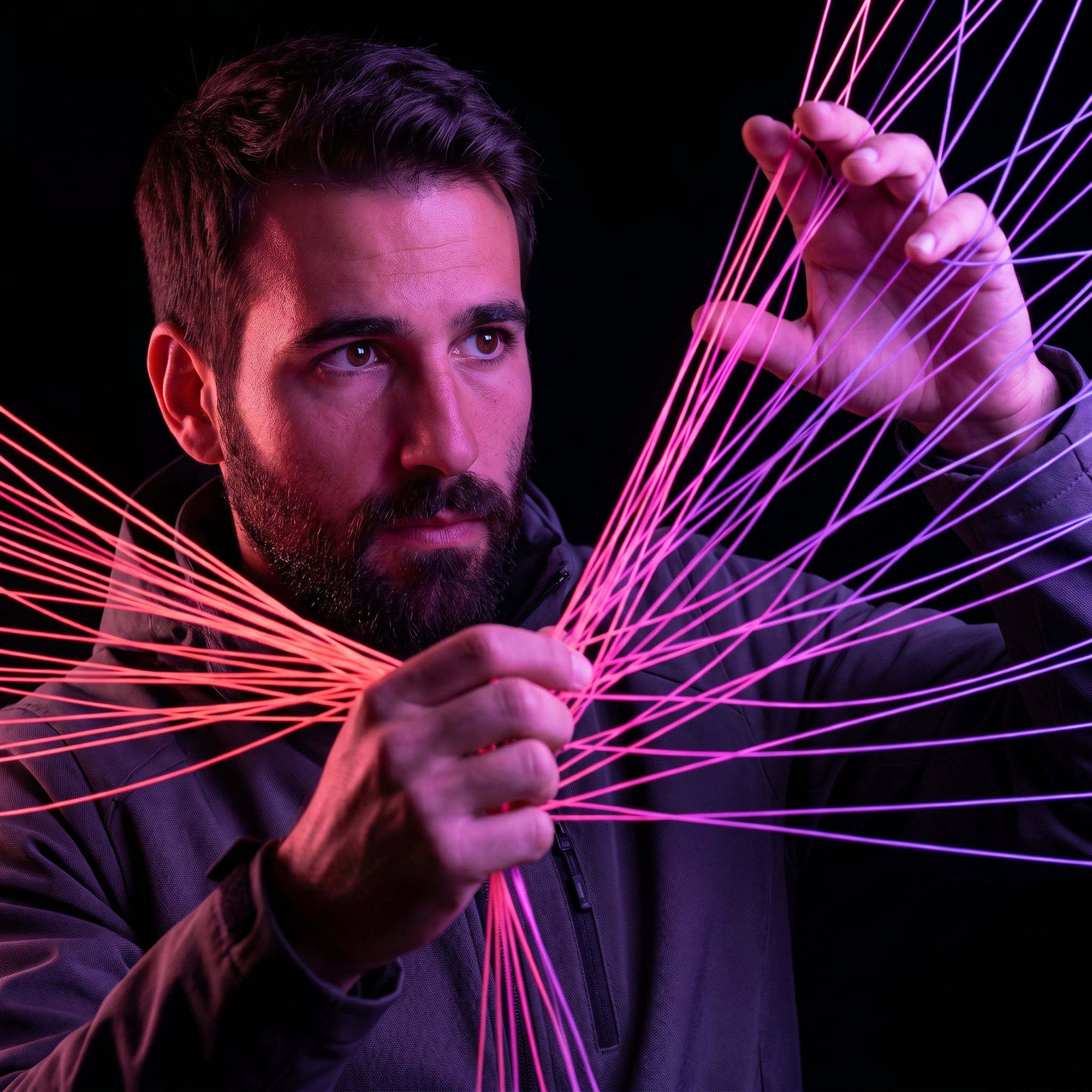
The first reader of everything you publish is now a machine. That machine decides whether any human ever reads it. This is what your content strategy is actually optimising for now.
 Nadim A. Massih3 June 2026 · 12 min read
When the Reader Was Always Human
The web had always been built for a simple transaction: a person searches, a page loads, a person reads. The entire architecture of search engine optimisation was built around that transaction. SEO (search engine optimisation) is simply the discipline of making your page findable: visible to the right person at the right moment.
That model lasted thirty years, which, in technology, is an eternity.
What ended it was not ChatGPT. It was not Perplexity, or Google’s AI Overviews (AI-generated answer summaries that appear above search results), or any single product announcement. It was something quieter: the slow accumulation of a new primary reader.
Search engines have always had crawlers. Crawlers read your pages constantly, invisibly. They understood what you had written and surfaced it to humans who searched for it. The crawler was always there; the human was always the destination. The crawler served the human.
What changed is that the machine stopped serving. It started answering.
Google’s AI Overviews now appear on 48% of all search queries as of March 2026 (BrightEdge Research, Q1 2026), up from 34.5% just three months before. In those queries, Google no longer sends the user to a page to read. It synthesises an answer from many pages, presents it at the top, and the user never clicks through. They have their answer. They are gone.
The click-through rate for pages that appear in AI Overview queries has dropped 58% according to Ahrefs (an SEO analytics and research platform) in their December 2025 study of 300,000 keywords. Seer Interactive (a digital analytics agency) measured 61% in their September 2025 research. The precise number depends on who measures it, but the direction is not ambiguous.
The machine is no longer a courier. It is the reader. That particular reader still has a name you know well.
AI Reads First Now
Google still controls 90% of the global search market. As of March 2026, StatCounter (a web service that tracks global search market share) puts it at 90.01%. All AI search engines combined, including ChatGPT, Perplexity, Claude, and Gemini Search, account for somewhere between 0.28% and 0.9% of referral traffic, depending on how you measure (Goodie, 2026). The death-of-Google narrative is empirically wrong.
What is happening is not Google dying. It is Google absorbing its own replacement.
Google is building the machine reader into itself. AI Mode, the full conversational search interface Google launched at I/O 2026, crossed one billion monthly users, with queries more than doubling every quarter (Google I/O 2026 keynote). The product that replaced the blue links is Google. The company cannibalising the click-through economy is the same company that created it.
The distinction matters practically. Google’s AI features run on RAG, or retrieval-augmented generation (a technique where Google’s AI searches its own index first, then composes an answer from those pages, rather than inventing one from scratch). In plain terms: it reads real pages before it writes a summary. Being well-indexed by Google still matters for being cited by Google’s AI.
But ChatGPT and Perplexity run their own independent crawlers (the software bots that read websites) and do not use Google’s index. Good Google SEO does not automatically translate to citation by those systems. The machine reader is plural, and each instance of it has its own appetite.
The structural shift, stated plainly: the pages you publish are now read, primarily, by a machine that decided your content is worth summarising to a human, rather than worth sending the human to read directly. The human may never arrive. The machine took what it needed.
For thirty years, the relationship was: search engine helps human find page. The page is the destination.
The relationship is now: AI engine helps human get answer. The page is the source material.
That shift, from destination to source material, is not a minor update to how search works. It is a different model of what the web is for.
The relationship is now: AI engine helps human get answer. The page is the source material.
Major publishers like Reuters are among the most-cited sources in AI systems. They receive less than 1% of referral traffic from those systems. Citation and traffic have decoupled. (Goodie, an AI search analytics research firm, 2026)
Source: Goodie 2026 AI Search Traffic Report
The Traffic Number That Changes the Math
That data has a specific implication for anyone running a content-dependent business.
Roger Lynch (CEO of Condé Nast, which owns The New Yorker, Vogue, and Wired) named what every publisher now faces: “plan for zero.”
Lynch did not say Google traffic will become unimportant. He said his teams should build their editorial and revenue strategies as if it does not exist, because counting on it will produce a plan that fails. You plan for zero not because zero is certain, but because every year you plan for less-than-zero the actual number undershoots your model.
He is not alone. Chartbeat (a web analytics platform that tracks traffic for major publishers) data, published in their 2025 State of the News Media report, shows search referrals fell 60% for small publishers, 47% for medium publishers, and 22% for large publishers over two years. News publishers collectively lost more than 600 million monthly visits (Reuters Institute Digital News Report, 2025). Chegg (an online homework and tutoring company) declined 49% (Chegg 2024 annual earnings report). Forbes, HuffPost, and Business Insider each lost roughly half their search-driven traffic (SimilarWeb data, 2025).
These are not struggling operations that made wrong bets. These are established publishers with large audiences, real editorial teams, and decades of SEO expertise. They did everything right by the old model. The old model changed.
Lynch named the shape of what remains: a barbell. Heavy at both ends. Nearly empty in the middle.
Large, authoritative brands with genuine audience trust are holding up. Small, niche publications with devoted direct subscribers are holding up. The middle, the vast category of SEO-dependent content built on traffic arbitrage, ad revenue, and Google as the primary distribution channel, is collapsing.
This is not a media story. It is a business model story. The barbell predicts the shape of every knowledge business over the next five years. The question for anyone who publishes, teaches, advises, or sells expertise on the web is: am I the authoritative end of the barbell, the loyal-niche end, or the exposed middle?
The practical answer requires understanding what the machine is actually reading, and why most of what you currently publish is invisible to it.
The machine does not read for keywords. It reads for credibility signals.
What the Machine Actually Reads
The practical question runs into a specific frustration: the machine reader does not rank things the way Google did.
With Google, you could build a strategy. You had data: which keywords brought traffic, how you ranked, how competitors ranked, where you had gaps. It was imperfect, but it was measurable. You could spend Tuesday afternoon in Search Console and come out with an action list.
There is no equivalent for AI citation. Practitioner tracking across AI platforms consistently finds that between forty and sixty per cent of the sources cited by AI systems change month to month, with no stable equivalent of a top-ten ranking. There is no stable “position one” in ChatGPT or Perplexity. There is no dashboard showing how often AI Overview cited you. There are no reports showing which questions users asked conversational AI: every conversation is unique and private.
The most counterintuitive finding from all of the available data:
Reuters and The Guardian are two of the most frequently cited sources in ChatGPT and Perplexity. They receive less than 1% of referral traffic from those systems. They are cited. They are not visited. The machine read their work, extracted what it needed, and kept the visitor. Being cited by AI does not mean being visited. Citation is an awareness signal. Traffic is a separate transaction, and for most publishers, it is not happening.
This breaks the old logic entirely. You cannot optimise your way from “cited” to “visited” using the tools that worked in search.
Google’s own guidance, published in May 2026 as the company’s first official AI optimisation guide, is notable for what it debunks. Specifically: llms.txt files (a proposed standard for declaring your content to AI crawlers, similar in concept to robots.txt, the file that tells web crawlers which pages to access); “chunking” content into small pieces; and rewriting pages specifically for AI. Google says to ignore all three, and independent testing confirms no major AI crawler reads llms.txt. The consultants selling these services are selling solutions to problems that do not exist as described.
What Google says does help is simpler and harder: create content that a human would find genuinely useful, that could not be produced by an AI summarising other people’s work. The word they use repeatedly in the guide is “non-commodity.” AI systems will not cite generic how-to articles, roundup posts, or content that merely restates what others have written. They can produce all of that themselves, without needing your page.
The Princeton KDD 2024 study (the only large-scale academic empirical test of AI citation optimisation, covering 10,000 queries) found three things that increase citation probability. Statistics improve AI visibility by 41%. Named expert attribution with quotation marks improves it by 28%. Inline citations to primary sources improve it by 115% for pages that do not already rank in the top results. Keyword stuffing degrades it. The machine reads for credibility signals, not keyword frequency.
The three content signals that measurably increase AI citation probability, from the only large-scale academic study of this question. (Princeton KDD 2024)
Source: Aggarwal et al., Princeton / IIT Delhi / Georgia Tech / Allen AI, KDD 2024
There is also a technical layer that matters: entity clarity (naming and declaring a specific, identifiable thing, your brand, your author, your publication, in a way that machines can reference with confidence) is becoming the primary competitive moat. A site that has declared its author name, its publication name, its topic area, and the relationships between its content using JSON-LD (a small code block that tells AI systems exactly who you are and what you publish) is easier for AI systems to cite with confidence than a site that is merely indexed. SchemaApp (a structured data platform that measures AI citation rates) found that the biggest gap in AI citability is not whether you have schema markup on individual pages. It is whether those pages form a coherent, linked identity across your whole site. That connected entity layer is the primary factor in whether AI systems deeply understand a brand or merely catch fragments of it.
But none of this is a ranking system. None of it produces a predictable number you can optimise toward. You are not building a strategy for a search engine. You are building a reputation with a reader that makes probabilistic judgements from large amounts of evidence. The play is identity, not tactics.
With the machine reader understood, the investment priorities become clear.
Three Ways to Think About This
Before the practical playbook, it is worth holding three positions on what all of this means. They do not resolve cleanly, and all three have real evidence behind them.
“Citation converts better. A smaller, motivated audience is worth more than a large passive one.”
AI engines send very little traffic by volume, 0.28% to 0.9% of total referrals, depending on who measures. But the visitors they do send convert at four to five times the rate of standard organic search traffic. Ahrefs’ internal data shows that AI-referred visitors, who were 0.5% of their total traffic, drove 12.1% of paid signups, a 23x conversion multiple for their specific B2B SaaS product (business software sold to other companies). The argument: a smaller audience of genuinely motivated visitors is worth more than a large audience of people who landed by accident and left in twelve seconds.
“You are cited. You are not visited. Build what AI cannot steal.”
Major publishers like Reuters and The Guardian are among the most frequently cited sources in ChatGPT and Perplexity, yet they receive less than 1% of referral traffic from those systems. The machines are reading their work, extracting the value, and returning almost none of the audience. The rational response is not to optimise for AI citation but to build the things AI cannot disintermediate: subscriber relationships, paid communities, proprietary data, live events, direct email. Condé Nast’s counter-move is concrete: 29% digital subscription revenue growth (Condé Nast, 2025), treating direct paid relationships as the strategic replacement for search referrals.
The machine cannot steal a subscriber.
“Google has 90% of search. AI engines send under 1% of referrals. Do not panic.”
The disruption is real, but it is concentrated on informational and research queries, and it has hit certain content categories, including recipes, how-to guides, and educational explainers, far harder than others. Brand discovery queries, local search, commercial-intent searches, and navigational queries are largely unchanged. The advice to “plan for zero” makes strategic sense for a media conglomerate whose entire business model runs on Google referrals. It does not make the same sense for a local services business or a direct-to-consumer brand. Do not let the collapse of one traffic model become a panic about all of them.
Each of these is partly right. The converter data supports the first. The citation-without-traffic paradox supports the second. The market share numbers support the third. The mistake is picking one and ignoring the others. With those positions clear, the practical investment has four destinations.
The Four Moves
If you run a publication, a brand, or a knowledge-based operation, all four apply.
Build a machine-readable identity
Declare who you are in structured data using JSON-LD: Organisation schema naming your publication, Person schema naming your author, Article schema on every piece you publish, FAQ schema on the questions each piece answers. This is a one-time technical task (an hour for a developer, or a plugin for WordPress if you run one). Machines that want to cite you correctly need to know who you are. Most sites do not tell them.
Technical · One-time · High impactWrite in self-contained, extractable units
Every paragraph should be able to stand alone as a cited passage. Open each paragraph with its claim. Support it with a sourced number. Close with the implication. AI systems extract passages, not pages. A 2,000-word piece that buries its key claim in paragraph fourteen will be cited less frequently than one that opens each section with a quotable sentence.
Editorial · Ongoing · ImmediatePut named expertise on the page
Named authors, named credentials, named sources. The machine is biased toward content that looks evidentiary. First-hand accounts from identified humans with identifiable expertise outperform anonymous content on every citation metric. This is not about celebrity; it is about legibility. A named expert says “someone is accountable for this claim.”
Editorial · Ongoing · High impactMeasure citation presence, not traffic volume
The right question is no longer “how many people visited?” but “when someone asks an AI engine about my topic, does my name appear in the answer?” There are no perfect tools for this yet, but manually querying ChatGPT, Perplexity, Google AI Mode, and Claude on your core topics takes twenty minutes and gives you a real signal. Run it monthly. Track changes. Treat it as your new impressions metric.
Strategy · Monthly · New metricFor most small publishers, the goal is not AI citation parity with Reuters. It is making the direct relationship strong enough that the machine's decision about what to surface becomes irrelevant. None of this is new. It is a return to what good journalism always required: expertise, attribution, sourced claims, a clear identity. The difference is that now the first audience those things need to satisfy is a machine.
The Play Is Identity
The sites that will survive this are not the ones with better SEO tactics. They are the ones with a clear enough identity that a machine can represent them accurately, and a loyal enough audience that losing the machine’s referral does not end the business.
The web is not ending. Reading is not ending. But the transaction at the centre of web publishing, a person searches, a page loads, a person reads, has acquired a new intermediary that was not there before. That intermediary has its own preferences, its own limitations, and its own criteria for what gets surfaced.
The barbell is the destination, not the threat. Build toward one end of it. Either become genuinely authoritative on a topic, the publication or the expert that AI systems cite because there is no credible alternative, or build a direct relationship with a specific audience that values what you do and will seek you out regardless of what any search engine shows them.
The middle is where being “pretty good at SEO” and “reasonably popular” and “broadly about AI” gets you. The middle is what Roger Lynch told his teams to stop depending on. The middle was always more fragile than the traffic numbers made it look.
The question is not “how do I optimise for AI search?”
The question is: what am I that a machine can trust and cite consistently, and what is my relationship with a human audience that does not require a machine’s permission?
Those are the only two questions that matter now.
- Run the 20-minute citation audit. Open ChatGPT, Perplexity, Google AI Mode, and Claude. Ask each one a question your publication or brand should be the answer to. Check whether your name appears. Do this monthly.
- Add entity schema to every page. Install JSON-LD with Organisation, Person, and Article types. One-time task: an hour for a developer, or a plugin for WordPress. It declares your identity to every AI crawler permanently.
- Rewrite one piece in claim-first structure. Take your best existing piece and rewrite so each section leads with a sourced, attributable claim: one paragraph, one claim, one source. Track whether your AI citation rate changes over 30 days.
- Build one direct channel. Email, paid newsletter, or community. One channel where you reach your audience without a machine’s permission. Not as a hedge against AI. As the foundation that should always have been there.
The machine is no longer a courier. It is the reader. And it has decided, for most queries, that it already has what it needs.
NWritten byNadim A. MassihAI & Tech StrategistMore articlesQuestions, answered first
Is Google search actually going away?
No. Google controls 90.01% of global search as of March 2026 (StatCounter). What is changing is that Google is building the intermediary layer into itself: AI Overviews and AI Mode answer queries without sending visitors to pages. The threat to publishers is not a rival search engine. It is Google absorbing the “answer” function into its own product.
Does schema markup actually help with AI citation?
Yes, with an important nuance. Google’s own May 2026 guide says structured data is not required for AI visibility and there is no special schema that unlocks AI Overviews. But SchemaApp’s research shows that tier-one schema types (Organisation, Person, Article, FAQ) produce a 3:1 improvement in AI citation rate versus unstructured content. Schema helps, but it is a foundation, not a shortcut. The real advantage is building a coherent, linked entity layer across your entire site, not just adding a type to individual pages.
What is llms.txt and should I implement it?
No. An llms.txt file is a proposed standard for declaring website content to AI crawlers. As of October 2025, only 951 domains had implemented one, and independent testing showed zero visits from any major AI crawler (GPTBot, PerplexityBot, ClaudeBot). Google’s official May 2026 guidance explicitly says to ignore it. It is a solution without an adopter.
Why does being cited by AI not always lead to more traffic?
Two reasons. First, AI systems answer the query directly, so users who would previously have clicked through now get their answer without leaving the AI interface. Second, when AI systems do cite sources, they typically surface a link as a footnote rather than as the primary result. Reuters and The Guardian are among the most-cited sources in ChatGPT and Perplexity; they receive less than 1% of referral traffic from those systems (Goodie, an AI search analytics research firm, 2026). Citation is an awareness signal. It is not, for most publishers, a traffic driver.
Sources & references
Condé Nast CEO Roger Lynch directed every brand to plan as if Google search traffic will be zero. Google went from a majority of their traffic to a quarter, heading to low single digits.
AI Overviews correlate with 58% lower CTR across 300,000 keywords. Worsening from 34.5% decline in April 2025.
First large-scale empirical study of AI citation optimisation across 10,000 queries. Statistics +41%, quotation +28%, inline citations +115% for lower-ranked pages.
Official guide to optimising for generative AI features. Confirms RAG pipeline, debunks llms.txt and chunking. AEO/GEO are “still SEO.”
2026 AI search traffic report. Reuters and Guardian receive less than 1% referral traffic from AI despite being top-cited sources. AI referral traffic: 0.28-0.9% of total.
AI-referred visitors drove 12.1% of paid signups while representing 0.5% of total traffic, a 23x conversion multiple for their B2B SaaS product.
WTF are GEO and AEO. Recipe publishers earn almost zero traffic from AI systems despite frequent citation. Publisher strategy perspectives.
Tier-one schema types produce 3:1 improvement in AI citation rate versus unstructured content. Entity layer vs per-page schema gap.
More articles

The Vibe Coder Fallacy: Why the AI Prototype Is Never the Product
An AI-built social network was fully breached three days after launch. The gap between AI-generated code and production-safe code is not closing.

LLMflation: Why AI Gets Cheaper and Your Bill Keeps Rising
Microsoft cancelled its Claude Code licences after engineers burned through its entire annual AI budget in weeks. How AI cost becomes your fastest-growing line item.

Own Your AI: Why the AI Subscription Model Is Breaking
AI is shifting from a service you subscribe to, to a feature you ship. The companies that own their models will compound. The ones renting will pay twice.

Anyone Can Make It Now: Why Making Things Stopped Being a Competitive Advantage
Google made its film studio free. WPP cut a third of its creative headcount. The tools gap closed. What that means for the people who spent years developing creative skills.
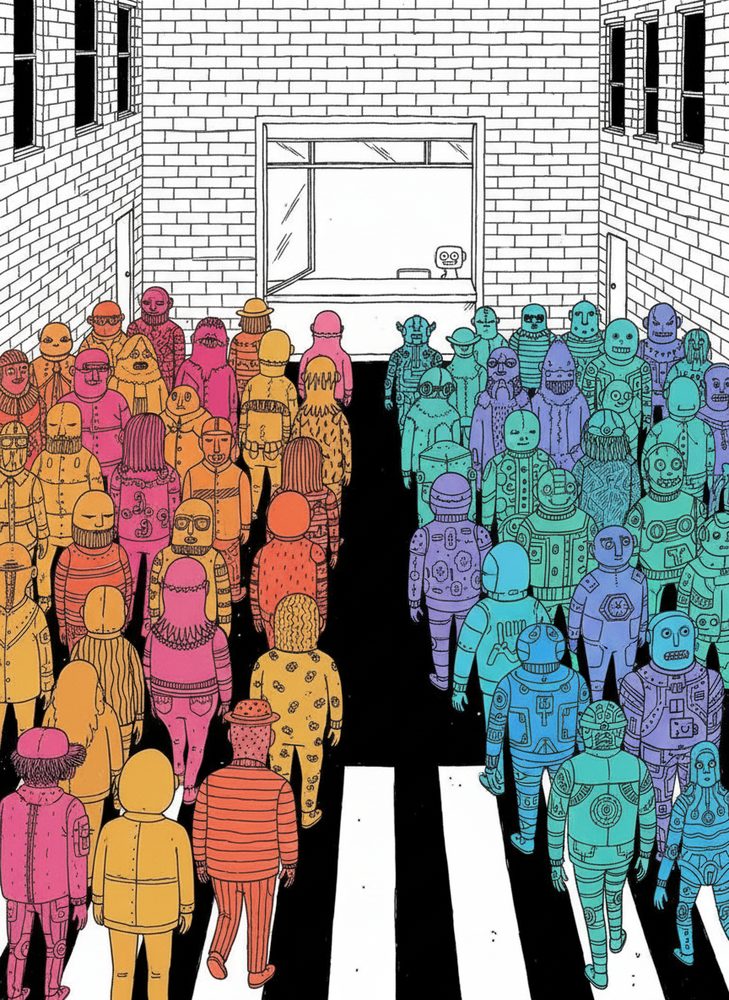
The Second Customer: Your Product Has Two Users Now. One Cannot Read Your Homepage.
AI-sourced traffic to US retail grew 393% in Q1 2026 and now converts 42% better than human traffic. Your product already serves a second user.

The Cheap Code Problem: When Anyone Can Ship Software, What Is Worth Building?
Snap fired a thousand people because AI writes 65% of its code. The hardest problems in software (requirements, judgment, reliability) have not changed.

The Taste Problem: When the Tools Are Equal, Taste Is the Only Edge
When AI can fake polish and effort, the new proof of human presence is specificity, voice, and the visible mark of a real person's perspective.